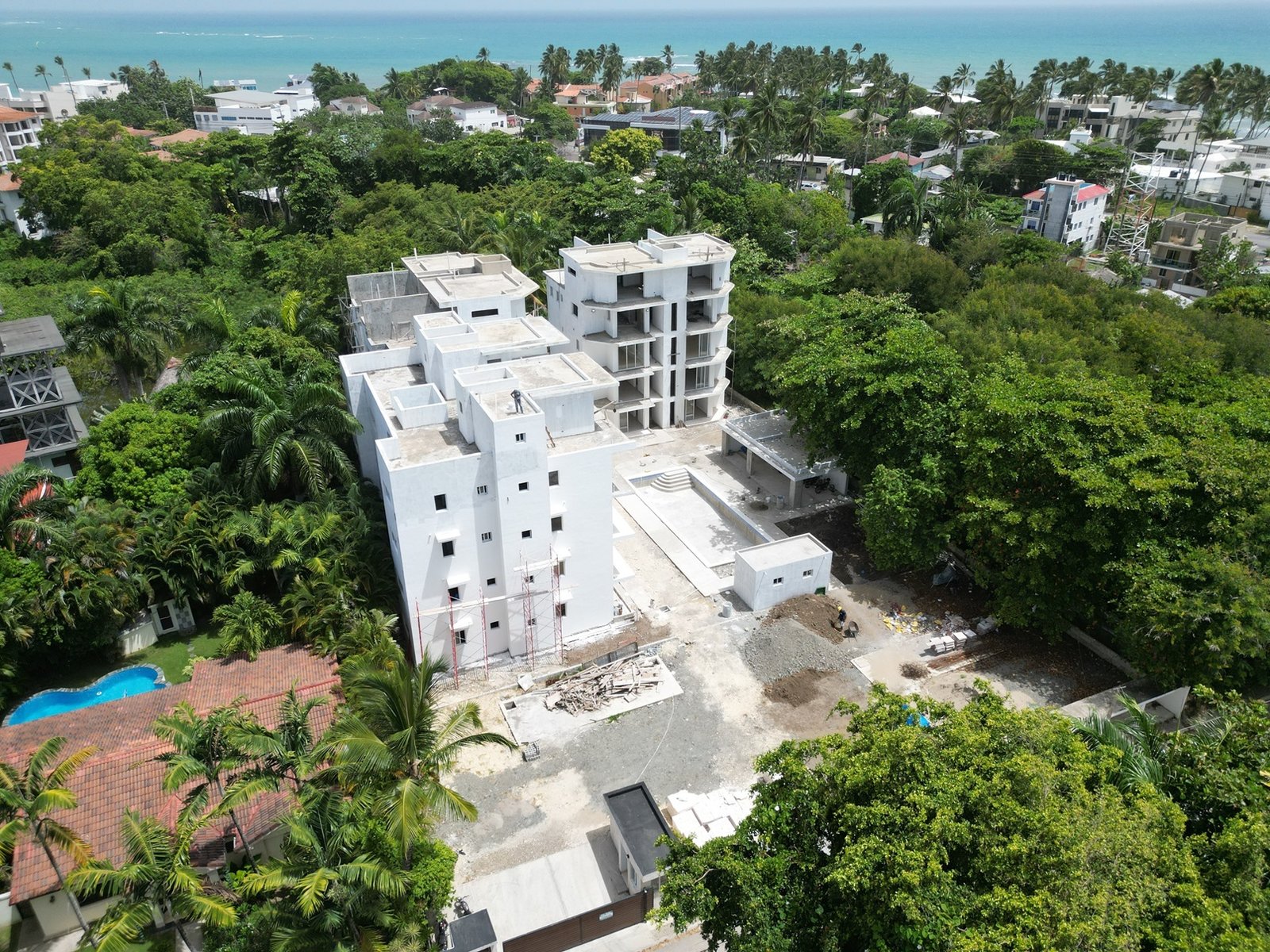
Cabarete
A beach town on the north coast, twenty minutes from an international airport, with a year-round wind season and a property market a fraction of the price of the south-east resorts.
The town
Cabarete sits on the Atlantic coast of the Dominican Republic, between Sosúa and Río San Juan, in the province of Puerto Plata. It grew up around a two-kilometre bay that turned out to be one of the best wind and wave spots in the Caribbean, and the town still runs on that rhythm: swimming and paddling in the morning, wind from midday, restaurants on the sand in the evening.
It is small enough to walk end to end and international enough that most business is done in English and Spanish, with German, French and Russian widely spoken. There is a permanent expatriate community of a few thousand people alongside the Dominican population.
Getting there
Gregorio Luperón International Airport (POP) in Puerto Plata is a twenty to twenty-five minute drive. In the winter season it takes direct flights from New York, Miami, Charlotte, Toronto, Montreal, Madrid, Frankfurt and several other European hubs. Santiago (STI) is around ninety minutes away, Santo Domingo (SDQ) around four hours.
Everyday life
Supermarkets, pharmacies, banks and hardware stores are in the town itself. Larger shopping and the private hospitals are in Sosúa (fifteen minutes) and Puerto Plata (twenty-five minutes). International schools operate in Sosúa and Cabarete, teaching in English and Spanish.
Fibre internet is available across the town, which is why the remote-work population keeps growing. Electricity comes from the national grid with generator backup, which every serious residential project in the area provides.
The market
North-coast prices are materially lower than Punta Cana, Cap Cana or Las Terrenas for comparable build quality, while the legal framework is identical across the country. Buyers here are typically North American and European individuals, not institutional funds, and a large share of the stock is bought partly for personal use and partly for rental.
Short-term rental demand is driven by the wind season from December to August, the winter escape from North America and Europe, and a steady base of digital nomads on multi-month stays.
Come and see it
We show both sites on any weekday, and send a live video walkthrough if you are not on the island.